There is little time to celebrate the Gold Cup, as the 2026 European Championship begins today and the fleets reset without pause.
Starting positions and fleet assignments can be found here:
Starting Positions: LINK
Results: LINK
As always, the top three sailors from each fleet advance, and that movement often shapes the early narrative of the new series.
From B fleet, Maxime Bachelin (Z-119) moves into Gold carrying both momentum and notable credentials. In addition to his DN success, he has sailed with the Alinghi Red Bull Racing America’s Cup program, bringing high performance foiling experience into the iceboat environment. How that background translates within the dynamics of Gold fleet racing will be worth watching.
From C fleet, Laura Banach (P-102) advances into B fleet after a strong performance and now steps into a deeper field that includes Germany’s Anja Fiedler (G-390), widely regarded as the leading female sailor in the class.
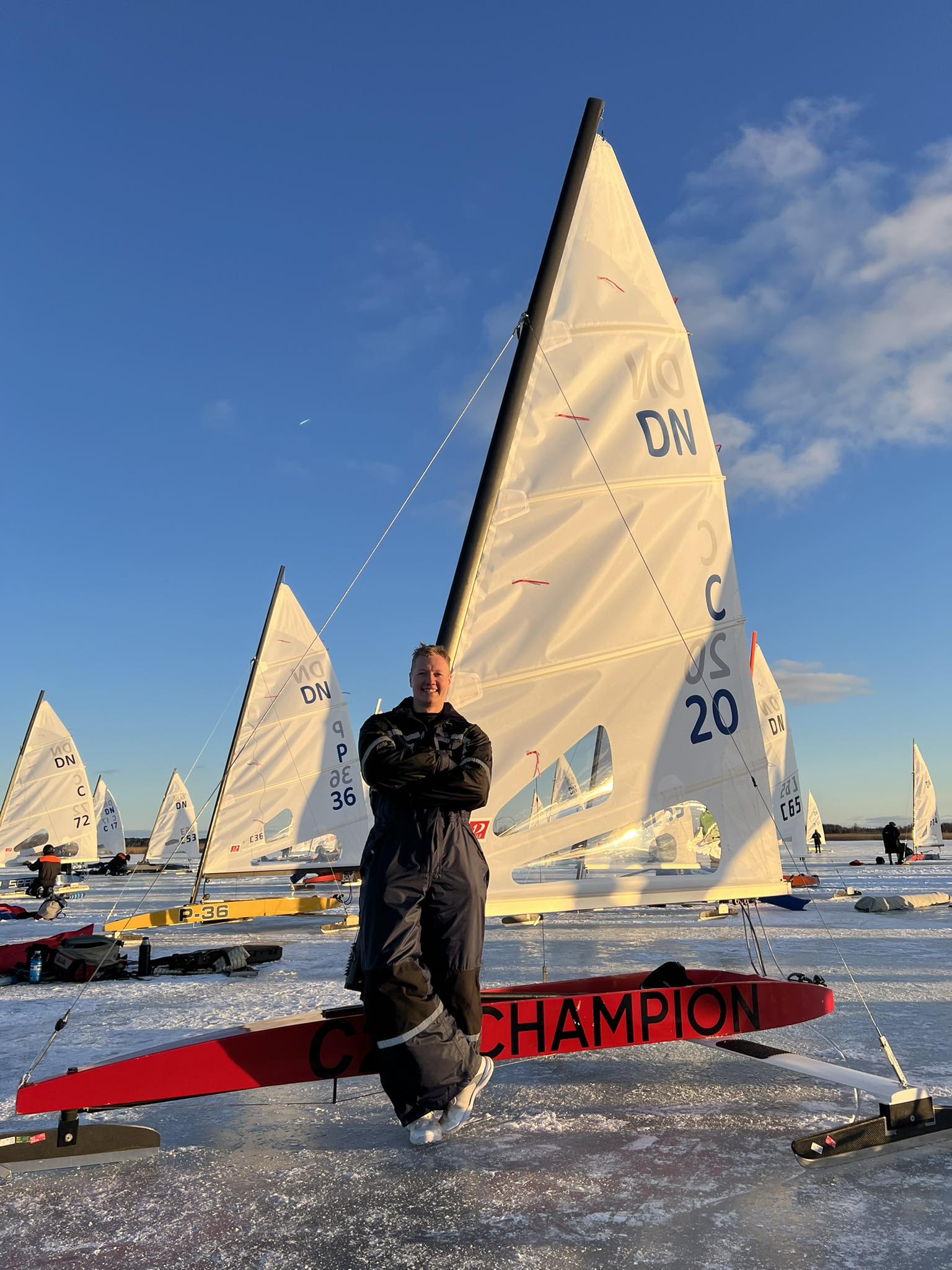
In Gold, several immediate storylines emerge. Fresh off his World Championship victory, Rasmus Maalinn (C-20) begins in the 7 block and remains a focal point from the first beat, continuing a run of form that has defined the week. Alongside him, Swedish junior Tom Hogard (S-906) enters the top tier with a favorable draw in starting position 3, an opportunity that will test how quickly he can convert position into result against a seasoned fleet.
One final Gold Cup note. I spoke with Karol Jablonski shortly after he returned to shore, where he expressed satisfaction with his second-place finish and offered sincere praise for Maalinn’s victory. He explained that his 37th-place result stemmed from a collision with another Polish boat in Race 2, which proved costly in such a tight series, and that the wind shifts in the final race did not align in his favor. He remarked that had someone told him a few days earlier that he would finish second at the World Championship, he would have accepted that outcome without hesitation. He was already heading off to join the Estonians in their celebration, pleased for their success.
The European Championship now begins in earnest, and positions must once again be earned from the opening race.
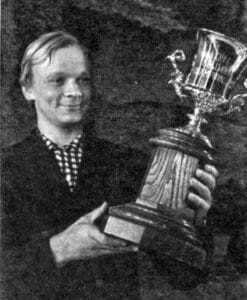
First winner of the Gold Cup in 1973: Ain Vilde, Estonia
When the first DN Gold Cup was awarded in 1973, it was won by Estonia’s Ain Vilde, placing Estonia at the very foundation of the championship’s history. More than fifty years later, Rasmus Maalinn has added a second Estonian name to that list.
Those of us following from afar have been watching the results come in and holding our breath. The championship tightened, shifted, and refused to declare itself early. It could just as easily have gone Karol Jablonski’s way. With his record and his form this season, that outcome would have surprised no one. Every race felt consequential, every update recalculated in real time by sailors and supporters alike.
Maalinn closed it out. Five races in Poland settled the matter, and he emerged at the top of a fleet that included multiple former champions and some of the most experienced sailors in the class.
Planning this championship was challenging. Potential weather forced an early shift from Poland to Sweden, only for conditions to reverse and send the fleet back again. That kind of logistical whiplash tests organizers and sailors alike. Hotels rebooked, ferries reserved, scouting reports reassessed, equipment packed and unpacked. To remain focused through that uncertainty is its own challenge. And then to win, on Polish home ice, with expectations high and history close at hand, may be one of the most difficult things to do in this class. It demands not only speed, but steadiness in the face of constant disruption.
From Ain Vilde in 1973 to Rasmus Maalinn today, Estonia has now claimed the Gold Cup at the beginning of the story and again in its modern era.
A new World Champion, and a result that kept us all watching until the end.
Congratulations as well to Karol Jablonski for a hard-fought second place, once again proving why he remains the benchmark in this class. And to Estonia’s Argo Vooremaa for securing third, giving Estonia not just a champion but two sailors on the podium.
UDATE: There have been 2 other more recent Estonian winners, but they were listed as competing for the former USSR, now corrected to Estonia (USSR). Estonian sailors have stood on the top step before, with Ain Vilde in 1973 and later M. Kuulman and T. Haagma during the Soviet era. What distinguishes this title is that Maalinn has won it racing for an independent Estonia, bringing the story full circle in a new political era.
While the Gold fleet drew much of the spotlight, the B and C fleets produced impressive performances of their own. In C Fleet, Poland’s Laura Banach (P-102) claimed the top position, followed by Switzerland’s Bernard Vananty (Z-124) in second and Finland’s Kimmo Viljamaa (L-147) in third. In B Fleet, Switzerland’s Maxime Bachelin (Z-119) took the win, with Sweden’s Tom Hogard (S-906) finishing second and Sweden’s Tomasz Flisiak (S-878) securing third. Congratulations to all for navigating a championship that demanded resilience and composure from every fleet.
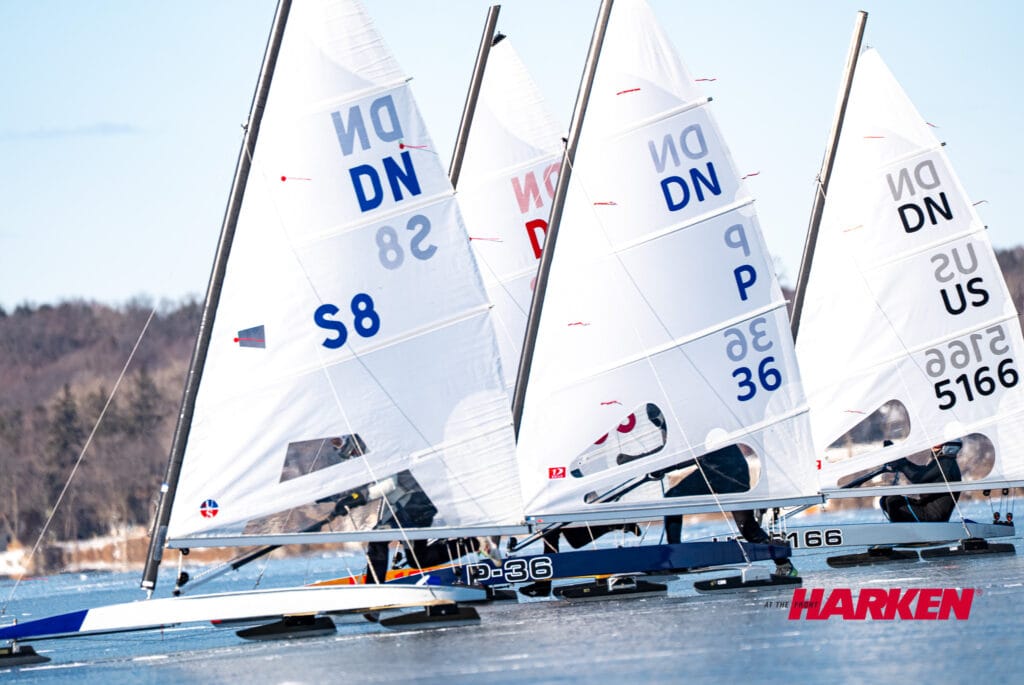
Frederik Lonegreen S8, Karol Jablonski P36, and Chris Berger US5166 push off the line. Photo: Rachel Bartel for @harken_inc
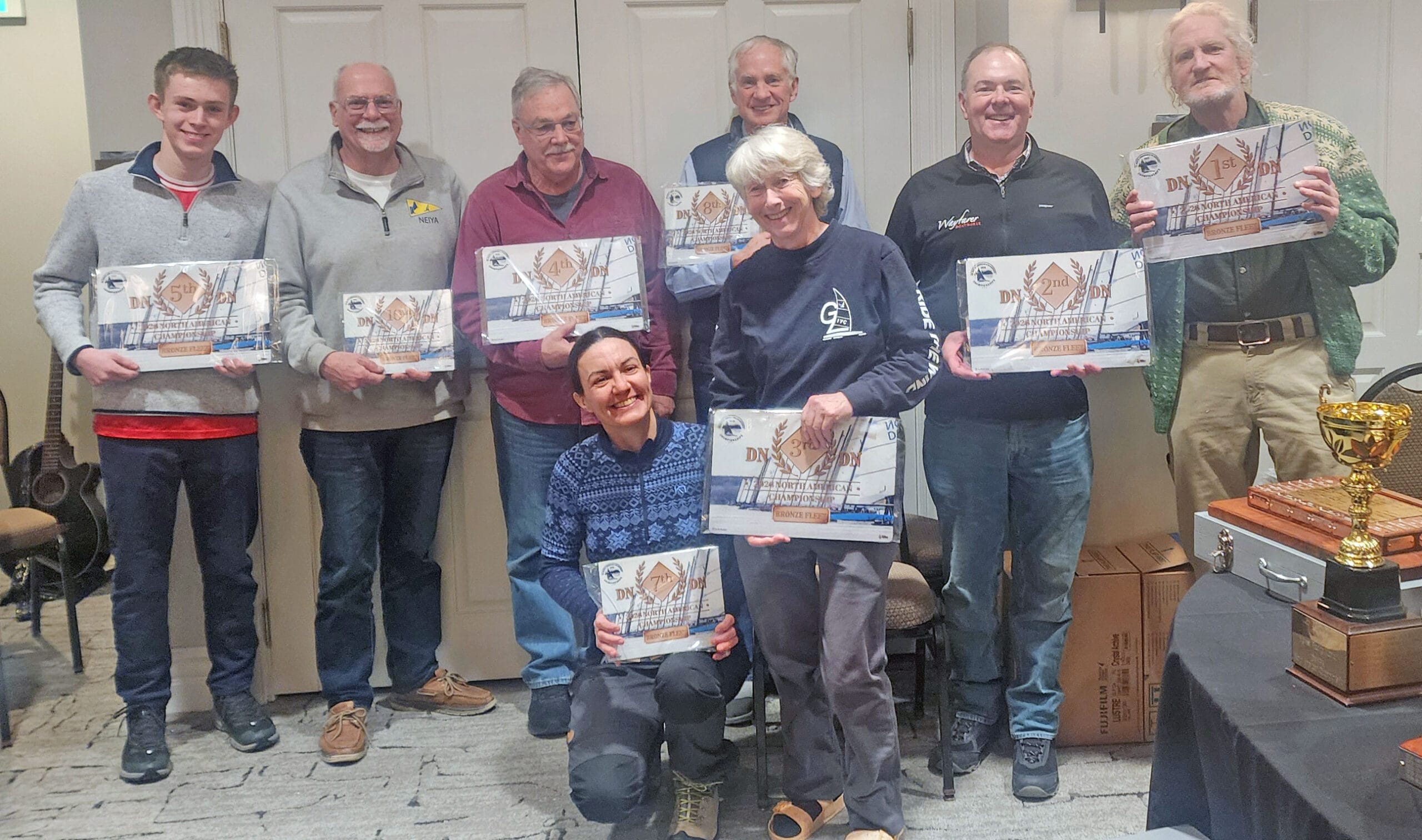
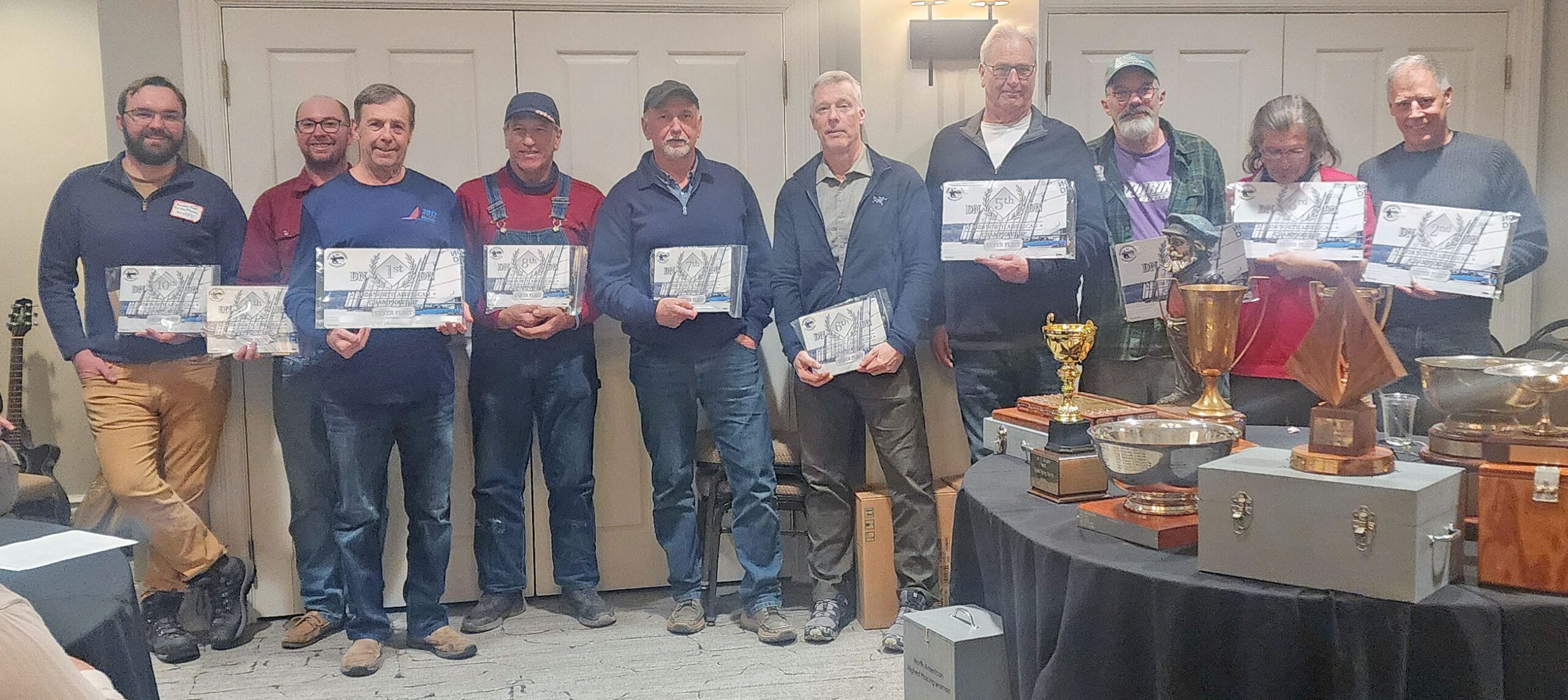
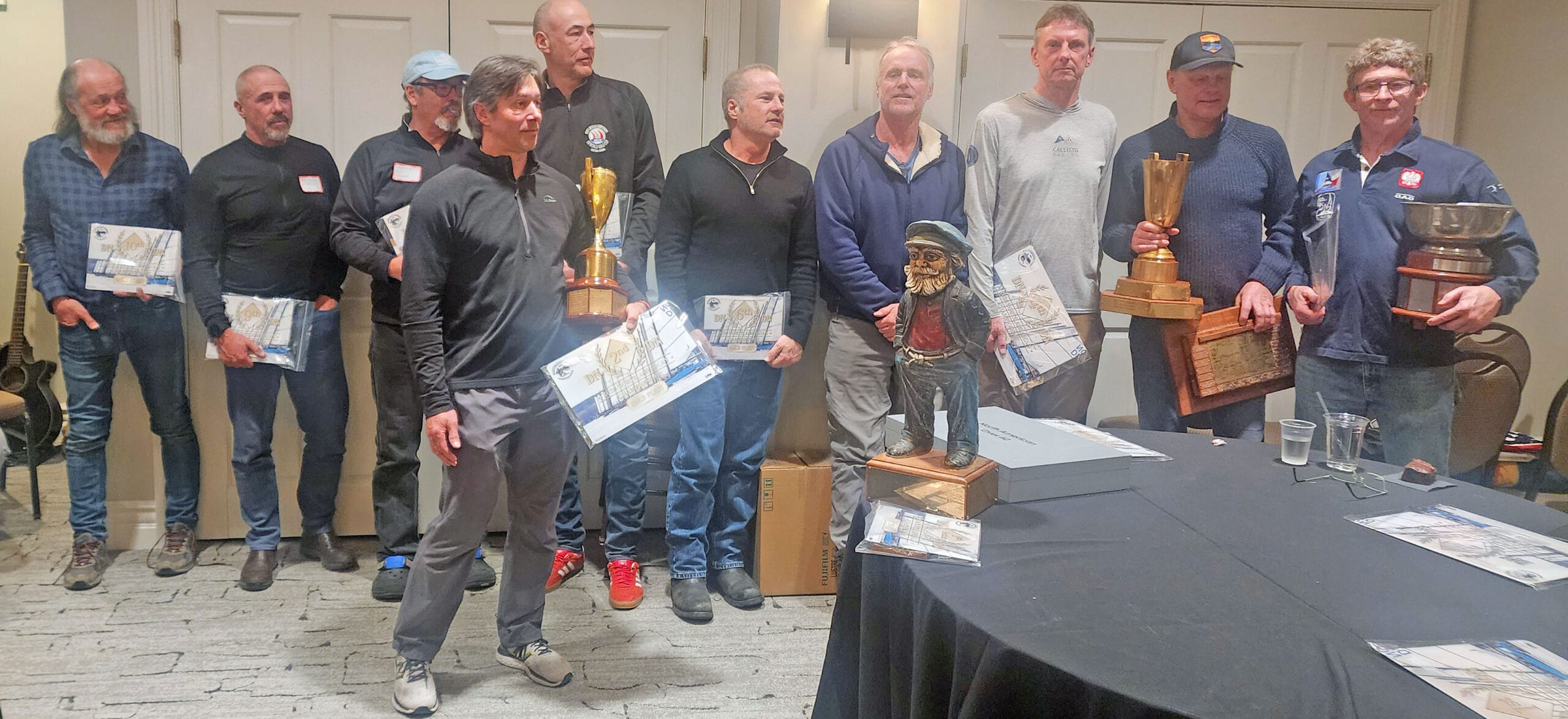
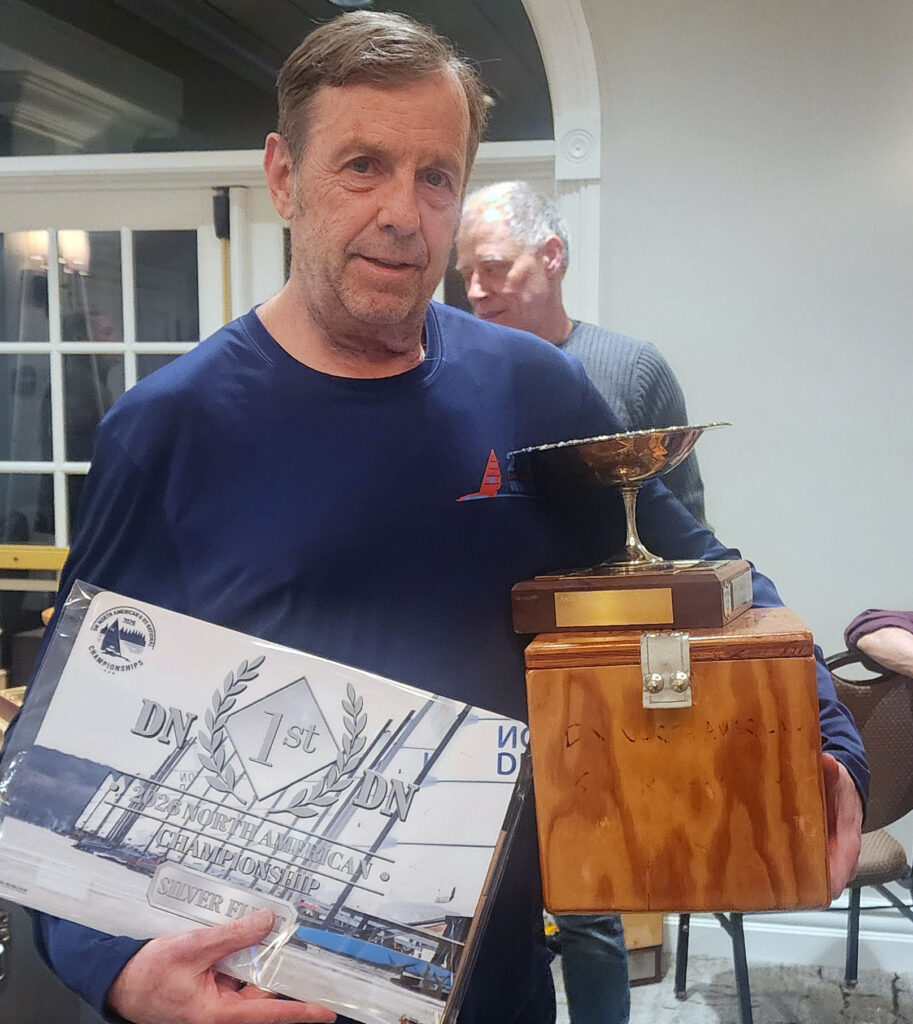
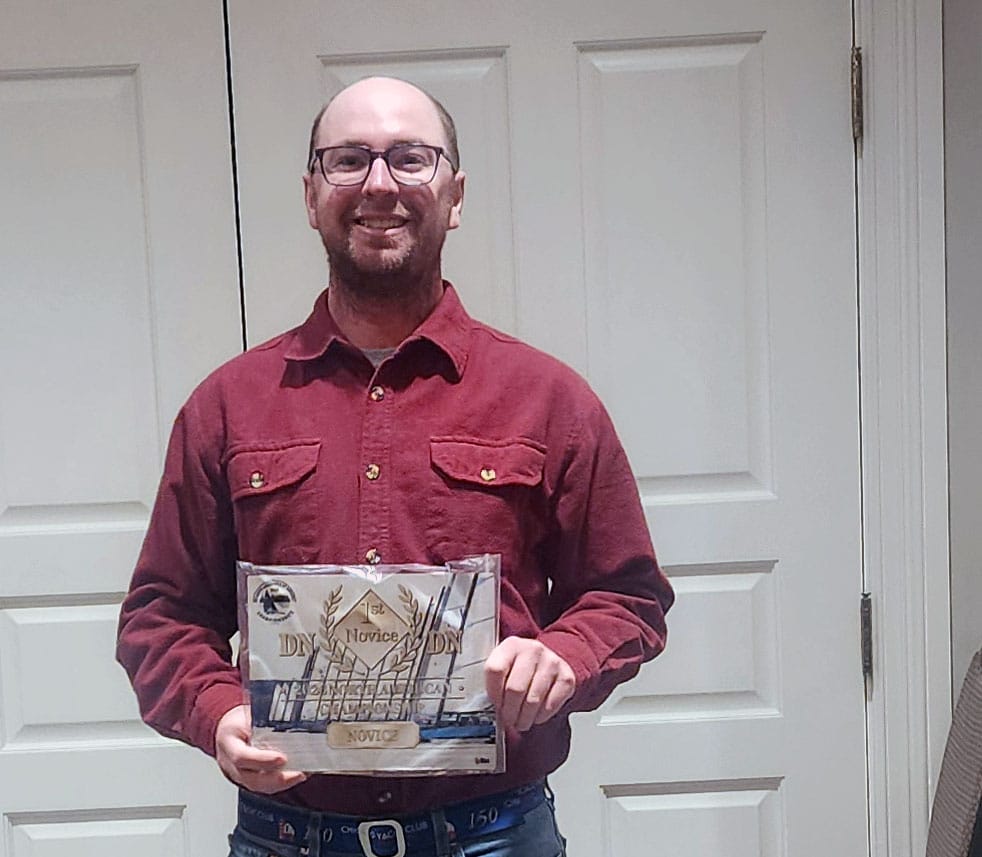
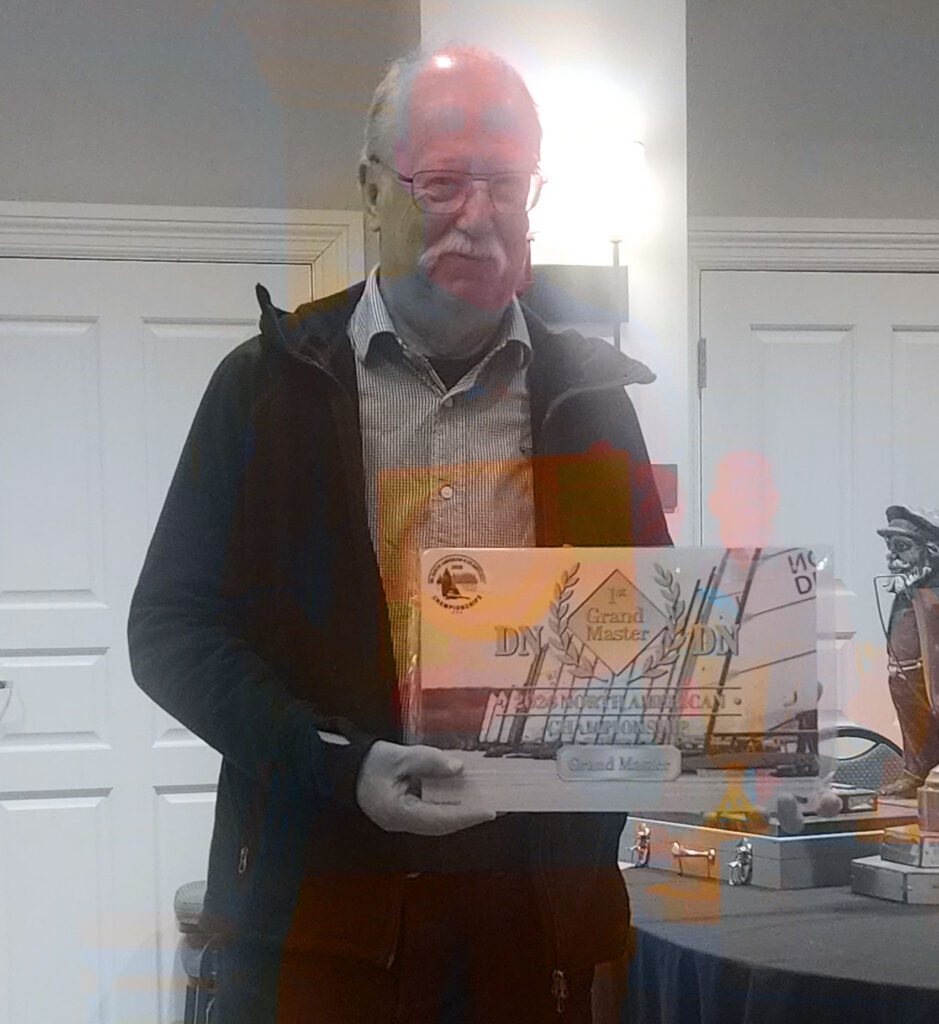
North American Championship awards were presented at Friday’s night Green Lake Ice Yacht Club social event at regatta headquarters. These photos capture the sailors who earned fleet trophies during a demanding week on the ice.
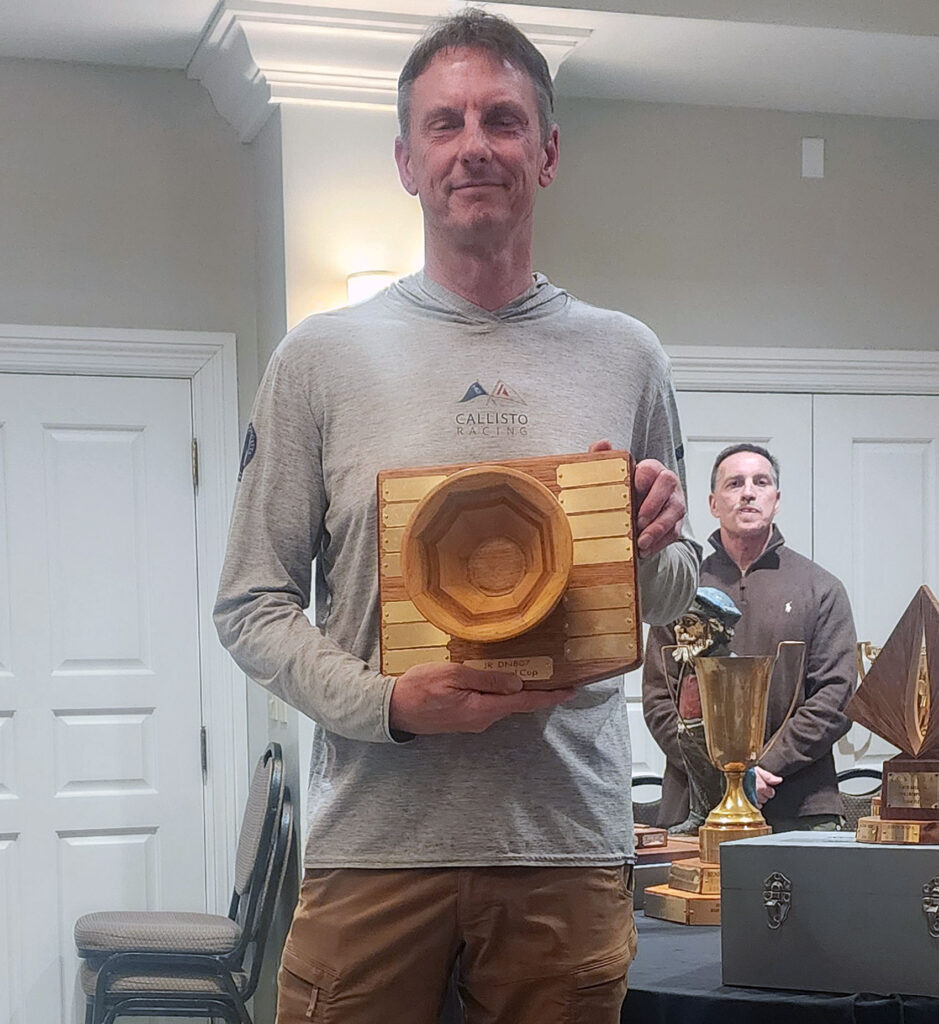
One especially meaningful presentation was the JR Francis Memorial Trophy, awarded to the winner of the first race of the North American Championship. The Francis family recently deeded the trophy to the DN class in JR’s honor. The bowl was made by JR himself while he was still in high school, making it a deeply personal piece of DN history.
Steve Orlebeke, winner of the first North American Championship race and the JR Francis
Karol Jablonski P36, winner of the 2026 DN North American Championship
Bronze Fleet: From left, Sebastian Sorensen 5th, Robert Haag 19th, Peter Shorett 4th, Peter Nordquist 8th, Tim Ballerd 2nd, Mike Rian 1st, in front Csilla Gal 7th, and Martha Croasdale 3rd. Martha was also the top placing female.
Silver Fleet: From left, Cooper Frost 10th, Ryan Kyle 9th, Jim Grogan 1st, 8th Keith Schwark, 6th Jake Skala, 7th Edward Demerest, 4th David Frost, 3rd Paul Chamberland, Rob Holman 2nd
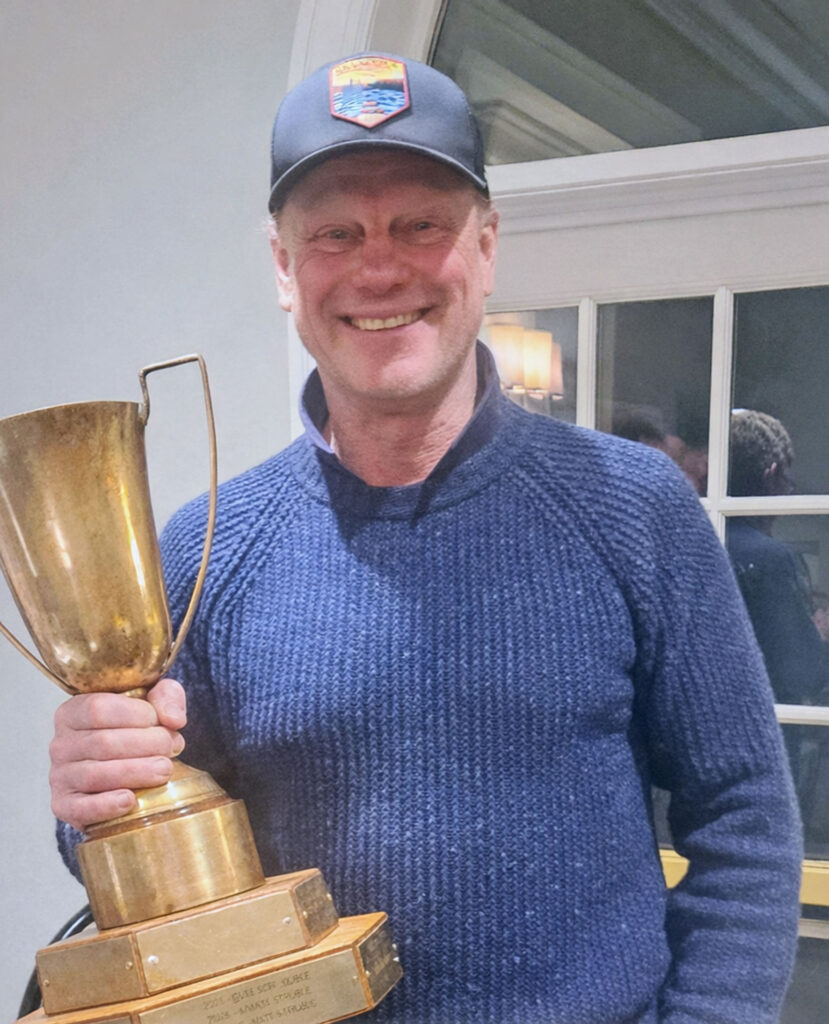
Gold Fleet: From left Jeff Roseberry 10th, John Curtis 9th, Peter Van Rossem 8th, Nicholas Mabboux 7th, Chris Berger 6th, James T Thieler 5th, Steve Orlebeke 4th, Karol Jablonski 1st, Ron Sherry 3rd, front Matt Struble 2nd
North American Junior Champion Sebastian Sorensen.
North American Silver Champion and Master winner Jim Grogan
North American highest placing Novice Ryan Kyle
North American Grand Master Champion Stefan Bokfors
Mike Madge has been busy reaching out to DN class members and asking questions. Here’s his interview with Poland’s Karol Jablonski, the 12-time DN World Champion. Below is the original video Karol and Mike are discussing.
P55 hit the road and visited Karol Jablonski P36. Karol, a 12 time DN Gold Cup champion, knows a thing or two about runners. Rumor has it that Tech Talk is working on having an American guest star talk about his runner philosophy. If you have questions or comments about this video, please leave them on DN Tech Talk’s Youtube page.
The DN is most popular iceboat in the world. Whether you are a racer or cruiser, your $25 membership in the IDNIYRA helps to promote the art and skill of DN ice yacht construction and the sport of ice yachting on all the hard waters of the world.
2027 REGATTA DATES
World & North American Championship
January 31 – February 7
Registration January 30